Good News from UGM AI Center

AI Joint Center UGM-IOH-NVIDIA
muhalfs

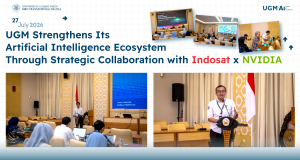
UGM Strengthens Its Artificial Intelligence Ecosystem Through Strategic Collaboration with Indosat and NVIDIA

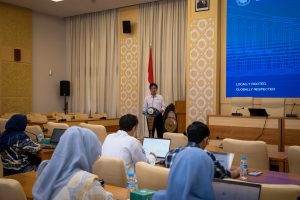
Yogyakarta, July 27, 2026 – Universitas Gadjah Mada (UGM) continues to strengthen its Artificial Intelligence (AI) ecosystem by fostering multidisciplinary collaboration that connects research, innovation, and technology development to address real-world challenges. This commitment was demonstrated through the UGM AI Seminar 2026, themed “Research with Artificial Intelligence (AI),” held at the Multimedia Hall, UGM Central Office Building, on Monday (July 27).

The seminar brought together researchers, faculty members, students, industry partners, and government representatives to share experiences in applying AI across diverse disciplines while showcasing innovative AI-powered solutions developed by UGM researchers. The presentations demonstrated how AI has evolved beyond a research support tool into practical solutions for law, energy, agriculture, healthcare, and disaster management.

Opening the seminar, Dr. Mardhani Riasetiawan, S.E., Ak., M.T., Head of UGM’s Bureau of Digital Transformation, emphasized that developing a robust AI ecosystem has become one of the university’s strategic priorities to strengthen research capacity, promote multidisciplinary collaboration, and accelerate digital transformation in higher education.

“Last year, we achieved an important milestone with the establishment of the UGM AI Center of Excellence. We were also honored to initiate a strategic collaboration with Indosat Ooredoo Hutchison,” he said.

Dr. Mardhani explained that before the partnership was formalized, teams from Indosat Ooredoo Hutchison and NVIDIA conducted several site visits and comprehensive assessments of UGM’s research infrastructure and institutional readiness. Following these evaluations, UGM was selected to become part of the NVIDIA AI Technology Center (NVAITC) network.

According to him, one of the biggest challenges in AI research is the limited availability of high-performance computing resources required to train and deploy advanced AI models.

“The greatest challenge in AI development has always been computational resources. Through this collaboration, we hope UGM researchers will gain access to significantly greater computing capacity than ever before,” he explained.

Beyond strengthening computational infrastructure, UGM has also launched several strategic initiatives to cultivate its AI ecosystem, including the Artificial Intelligence Talent Factory (AITF) and the establishment of the UGM AI Faculty Members Network, which brings together researchers from various faculties to encourage interdisciplinary collaboration.

Dr. Mardhani highlighted that UGM’s greatest strength lies in its multidisciplinary nature.

“What we value most in this collaboration with NVIDIA is UGM’s multidisciplinary character. Our approach goes beyond technical aspects by actively involving researchers from social sciences, humanities, health sciences, agriculture, engineering, and many other disciplines.”

He added that the university aims to develop an AI ecosystem collaboratively.

“We want to build this ecosystem together because no significant achievement can ever be accomplished alone.”

One of the key outcomes of the collaboration with Indosat Ooredoo Hutchison and NVIDIA is the provision of Artificial Intelligence Infrastructure as a Service (AI Infrastructure as a Service – AIaaS). Through this initiative, researchers gain free access to enterprise-grade GPU computing infrastructure for developing, training, and deploying AI models without the need to invest in their own high-performance computing facilities.

This shared infrastructure has significantly accelerated experimentation, model development, and multidisciplinary AI research across the university.

The seminar featured numerous research projects that have benefited from this AI infrastructure.

From the Faculty of Law, Dr. Rimawati, S.H., M.Hum., demonstrated how Artificial Intelligence is transforming legal research by assisting researchers in searching legal regulations, analyzing court decisions, and organizing legal references. Tasks that previously required weeks of manual work can now be completed within hours. Nevertheless, she emphasized that AI should remain a research assistant rather than replacing legal scholars, as every AI-generated output must still be verified against authoritative legal sources.

Another presentation by Prof. Dr. Ir. Ferian Anggara, S.T., M.Eng., IPM., from the Faculty of Engineering, showcased the application of machine learning in mineral and energy exploration. By integrating geological datasets with AI-based predictive modeling, researchers can identify mineral potential more efficiently, reducing both exploration time and operational costs.

One of the seminar’s major highlights was presented by Dr. Andri Prima Nugroho from the Faculty of Agricultural Technology, who introduced UGM’s AI-driven Smart Agriculture initiatives.

His research integrates machine learning, computer vision, Internet of Things (IoT) technologies, environmental sensors, drones, multispectral imagery, and weather data to transform agricultural data into intelligent recommendations that support precision farming.

The technologies showcased include the SIPASI Smart Irrigation System, AI-powered greenhouses, plant factory technologies, crop health monitoring using unmanned aerial vehicles, fertilizer decision-support systems, and AI-based knowledge management platforms. According to Dr. Andri, AI in agriculture must be developed based on local conditions and through close collaboration among researchers, farmers, government agencies, and industry partners to produce solutions that are both scientifically sound and practically applicable.

The seminar also presented the development of an AI-powered electronic nose (e-Nose) platform, which combines advanced sensor technologies with artificial intelligence algorithms to recognize complex odor patterns automatically. Supported by the AI infrastructure provided through the collaboration with Indosat Ooredoo Hutchison and NVIDIA, this technology has the potential to support rapid disease screening, healthcare diagnostics, food quality assessment, and industrial monitoring.

Another research showcase came from Dr. Nur Mohammad Farda of the Faculty of Geography, who introduced Tech4Disaster, a GeoAI platform integrating geospatial technologies, IoT, satellite imagery, drones, big data, and artificial intelligence into a comprehensive disaster management ecosystem.

The platform supports the entire disaster management cycle—from mitigation and preparedness to emergency response and post-disaster recovery—by transforming large volumes of spatial data into actionable real-time intelligence. Applications demonstrated during the seminar included rapid disaster mapping, AI-based damaged-building detection using deep learning, participatory needs mapping, and geospatial disaster information portals that assist emergency response agencies in making faster and more informed decisions.

The seminar clearly illustrated that Artificial Intelligence at UGM has progressed far beyond being merely a research tool. Across multiple disciplines—including law, engineering, agriculture, healthcare, and disaster management—AI is now enabling innovative solutions with tangible societal impact.

Through its strategic collaboration with Indosat Ooredoo Hutchison and NVIDIA, UGM is not only strengthening its computational capabilities but also accelerating the development of impactful AI research. The availability of AI Infrastructure as a Service (AIaaS) has become a critical foundation for enabling multidisciplinary AI innovation while reinforcing UGM’s commitment to building a collaborative, sustainable, and globally competitive AI ecosystem that contributes to Indonesia’s digital transformation.

Read More »
AITF KOMDIGI dan UGM
muhalfs

UGM Students Develop an AI Platform to Monitor Public Issues and Viral Content

A team of students from Universitas Gadjah Mada (UGM) participating in the Artificial Intelligence Talent Factory (AITF) Batch 1 2026, a collaborative program between Indonesia’s Ministry of Communication and Digital Affairs (Komdigi) and Universitas Gadjah Mada, has successfully developed an artificial intelligence (AI)-powered platform for monitoring public issues and digital conversations.

The platform automatically monitors online news and social media through data crawling, classifies emerging issues, analyzes public sentiment, maps media narratives, and generates daily briefs to support data-driven decision-making. Beyond processing text, the system is also capable of analyzing images and audio, presenting insights through an interactive dashboard, and providing an AI-powered chatbot to assist users in interpreting the collected information.

One of the student developers, Gevan, explained that the idea originated from the growing challenges of the digital economy, where the volume, diversity, and speed of information shared across social media have made manual monitoring and analysis increasingly difficult.

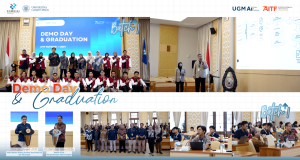
“Through this platform, monitoring public conversations, analyzing issues, and developing communication strategies can be carried out more quickly, systematically, and based on data,” he said during the Demo Day and Graduation of the Artificial Intelligence Talent Factory 2026 Batch 1, held at the Multimedia Room, UGM Central Building, on Wednesday (June 24).

According to Gevan, the platform follows an integrated workflow. It begins by identifying trending topics through Google Trends and Trends24 while also allowing users to input custom keywords based on specific monitoring needs. A keyword generation module then expands these keywords to drive the crawling engine, which collects multimodal content—including text, images, and audio—from online news portals and social media platforms.

The collected data is subsequently enriched using AI technologies. Images are processed through image captioning, while audio content is automatically converted into text using speech-to-text technology. The system then performs automatic labeling, sub-issue categorization, and sentiment analysis before storing the processed data in a centralized database and presenting it through an interactive monitoring dashboard.

Beyond monitoring, the dashboard groups related articles, generates concise summaries using the 5W+1H framework, identifies key stakeholders and their statements, and automatically produces daily briefing documents summarizing the most viral issues from the previous day.

“The platform provides decision-makers with a comprehensive overview of emerging public issues, enabling faster and more informed responses,” Gevan added.

The system is also equipped with an Early Warning System (EWS) that detects sudden spikes in online conversations or issues with the potential to go viral. Leveraging Large Language Models (LLMs), the platform analyzes digital narratives in real time and provides recommendations for proactive communication strategies based on the latest available information.

Meanwhile, Dr. Said Mirza Pahlevi, M.Eng., Head of the Digital Talent Development Center at the Ministry of Communication and Digital Affairs, praised the innovative solutions developed by the AITF participants. He noted that the projects reflect the outcomes of four months of intensive hands-on learning fostered through collaboration among universities, government, and industry.

He expressed his hope that the Demo Day and Graduation would serve not only as a showcase for students’ achievements but also as a forum for constructive discussions on advancing AI adoption in Indonesia.

“The AI solutions presented today demonstrate how artificial intelligence can be leveraged to understand the dynamics of public opinion and support faster, more accurate, and data-driven decision-making,” he concluded.

Read More »
AI Joint Center UGM-IOH-NVIDIA
muhalfs

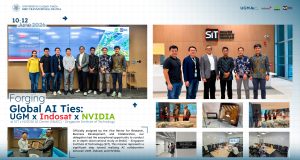
Forging Global AI Ties: Strategic Move by UGM, Indosat, and NVIDIA to Build an Applied Research Ecosystem at SNAIC Singapore

SINGAPORE – The Digital Transformation Office (BTD) team of Universitas Gadjah Mada (UGM) recently concluded a strategic mission during an observational study visit to the Singapore Institute of Technology (SIT) from June 10 to 12, 2026. This cross-disciplinary delegation’s visit is part of a strategic initiative under the direction of the Vice Rector for Research, Business Development, and Collaboration of UGM, with the primary mission of following up on the collaborative plans between UGM, Indosat, and NVIDIA to establish a tangible Artificial Intelligence (AI) ecosystem for both industry and society.

The main focus of this observational study was to delve into the operations of the NVIDIA Joint Center at SIT, professionally known as SNAIC (SIT-NVIDIA Artificial Intelligence Centre). Through this visit, the UGM team explored the operational practices of a world-class AI research center, future-ready technological infrastructure management, and implementation strategies for innovation programs that bridge academia with global industry leaders.

Welcomed by Key Figures in Singapore’s AI Ecosystem

Throughout the observational series at the SIT campus, the UGM delegation was welcomed by and engaged in intensive discussions with leading figures and principal researchers driving Singapore’s AI ecosystem. The strategic meeting was directly accompanied by A/Prof. Daniel Wang, Co-director of SNAIC and Director of the SIT Data Science & AI Lab, alongside Ng Aik Beng, Ph.D., Senior Regional Manager at NVIDIA AI Technology Center Asia Pacific South, who brings over two decades of industry expertise.

Also present to enrich the cross-disciplinary technical exchange were top-tier researchers from SNAIC, including Dr. Timothy, a Natural Language Processing (NLP) expert and SUTD alumnus; Dr. Akshita Abrol, a Post-Doctoral Fellow focusing on AI-based speech analysis for diagnostic healthcare; and Isfaque, a Research Engineer specializing in security data analytics, Graph Neural Networks, and Machine Learning.

A Cross-Disciplinary Approach for Real-World Solutions

The quality of the discussions became highly focused on actionable solutions, thanks to the multidisciplinary composition of the UGM delegation. Led by experts in their respective fields, the UGM team comprised Ir. Andri Prima Nugroho, S.T.P., M.Sc., Ph.D. (agricultural informatics expert), Dr. Nur Mohammad Farda, S.Si., M.Cs. (remote sensing expert), dr. Dian Kesumapramudya Nurputra, Sp.A., Ph.D. (pediatric neurology expert), and Muhammad Alif Taufiqurrahman, S.Kom. (Systems Analyst).

The inclusion of experts from diverse backgrounds breaks the traditional stereotype that AI development belongs solely to pure computer scientists. A fascinating synergy emerged during the discussions; for instance, the AI research for medical devices presented by dr. Dian (UGM) found a strong common ground with the diagnostic healthcare research focus of Dr. Akshita (SNAIC). AI applications at UGM are specifically designed to solve concrete problems—ranging from optimizing cutting-edge agriculture, extracting satellite imagery for disaster management and mitigation, to innovating intelligent algorithms to support the precision of pediatric medical devices in hospitals.

Bridging Academia and Global Industry

Through deep observation alongside SNAIC leadership, the UGM delegation studied the three-prong governance model driving the AI center: Industry Enablement (accelerating AI adoption in business), Applied Research & Development (industry-scale applied research), and Talent Development (cultivating job-ready digital talent).

SNAIC demonstrated how a higher education institution transforms from a purely academic approach toward creating direct impact. One prominent example studied was the implementation of the Industrial Doctorate program, where doctoral-level research is fully aligned with industry projects to solve real challenges within the business and operational sectors.

Becoming a Beacon of AI Innovation in Indonesia

The insights gathered from this visit with SNAIC’s leadership and researchers will serve as a vital foundation for UGM in formulating an academic-industry collaboration model with Indosat and NVIDIA in Indonesia. This strategic partnership aims to build a center of excellence in AI that functions as a national beacon of innovation. This upcoming AI center will not only coordinate scattered internal research across the university but also foster solid trust from both industry and government to accelerate technological leaps in the country.

Read More »
AITF KOMDIGI dan UGM
muhalfs

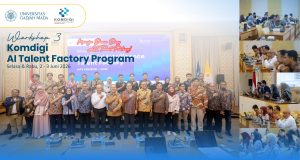
AI Talent Factory Workshop 3 Strengthens AI Solution Development for Public Communication and Media

YOGYAKARTA – The Ministry of Communication and Digital Affairs (Komdigi), through the Human Resources Development Agency for Communication and Digital Affairs, in collaboration with Universitas Gadjah Mada (UGM), organized the third Artificial Intelligence Talent Factory (AITF) Workshop on 2–3 June 2026 at the Multimedia Room 1, UGM Central Building, Yogyakarta.

The workshop is part of the broader AI Talent Factory program, which aims to strengthen Indonesia’s digital talent ecosystem by enhancing competencies in Artificial Intelligence (AI). The program serves as a collaborative learning platform that encourages participants to develop innovative AI solutions relevant to industry and public sector needs.

During the third workshop, participants presented the progress of their Phase 3 projects and received feedback from mentors, technical tutors, and subject-matter experts. The event also focused on Demo Day preparation, participant performance evaluation, and refinement of solution development strategies.

Over the course of two days, participants engaged in intensive discussions and project presentations centered on public communication and media use cases. The showcased solutions included a Monitoring and Evaluation Dashboard, an Issue Narrative Model, a Communication Strategy Model, and an AI solution based on Retrieval-Augmented Generation (RAG) and a Minimum Viable Product (MVP).

The workshop provided participants with opportunities to assess the maturity of their projects, identify technical and implementation challenges, and formulate action plans for the final demonstration stage.

The collaboration between Komdigi and UGM is expected to cultivate adaptive, critical, and solution-oriented AI talents while fostering innovations that support public communication needs and strengthen information resilience in Indonesia.

Workshop 3 marks an important milestone in ensuring that each team develops AI solutions that are not only technically robust but also capable of delivering tangible impact for society and Indonesia’s ongoing digital transformation.

Read More »
AITF KOMDIGI dan UGM
muhalfs

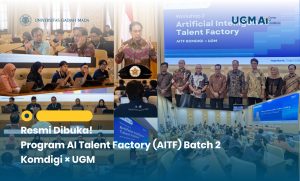
Komdigi x UGM – AI Talent Factory (AITF) Batch 2 — 2026

Program intensif kecerdasan artifisial oleh Kementerian Komunikasi dan Digital, resmi berkolaborasi dengan Universitas Gadjah Mada.

Tentang Program AITF adalah program pelatihan AI intensif yang diselenggarakan oleh Pusat Pengembangan Talenta Digital Komdigi bersama Universitas Gadjah Mada. Program ini mencakup tiga Learning Path: Data Science, Deep Learning, dan LLM Practitioner — diakhiri dengan Demo Day dan Graduation.

Surat resmi dan panduan lengkap dapat diakses melalui: surat-resmi-aitf-komdigi-batch-2

Konversi SKS: 6 – 20 SKS (menyesuaikan kebijakan)
Durasi: ±4–6 bulan (Agustus – Desember 2026)

Link Pendaftaran: ugm.id/daftaraitf2

Link Learning Path: digitalent.komdigi.go.id atau klik disini

MAHASISWA

  • S1 tahun ke-3/4 atau Mahasiswa Magister
  • Prodi: AI, Data Science, Informatika, Teknik Komputer, Statistik, atau sejenisnya
  • Menguasai Python & Machine Learning dasar
  • Berpengalaman dengan Git, GPU/Cloud
  • Komitmen penuh ±4–6 bulan
  • Portofolio AI/Data Science (diutamakan)

DOSEN

  • Dosen/Tutor Teknis di UGM
  • Wajib menyelesaikan LP3: LLM Practitioner
  • Ikuti seleksi internal UGM

Timeline Lengkap

Seleksi Mahasiswa

  • 25 Mei 2026 – Pembukaan pendaftaran
  • 25 Mei – 6 Jul – Pendaftaran & pengerjaan LP1: Data Science
  • 13 – 17 Jul – Ujian Seleksi (Proctoring)
  • 27 – 31 Jul – Interview peserta
  • 5 Agustus – Pengumuman hasil seleksi
  • 10 Agustus – Konfirmasi peserta/kampus

Seleksi Dosen

  • 25 Mei – 6 Jul – Pendaftaran & pengerjaan LP3: LLM Practitioner
  • 13 – 31 Jul – Seleksi internal UGM
  • 5 Agustus – Pengumuman hasil seleksi

Pelaksanaan Program

  • 14 Agustus – Kick-off AITF UGM Batch 2
  • 14 Agt – 4 Des – Pelaksanaan program penuh
  • 24 Agt – 24 Sep – Belajar mandiri LP2: Deep Learning + Workshop 1
  • 29 Sep – 29 Okt – Belajar mandiri LP3: LLM Practitioner + Workshop 2
  • Week 1 November – Workshop 3
  • Week 4 November – Demo Day
  • Week 1 Desember – Graduation/Kelulusan
Read More »
AITF KOMDIGI dan UGM
muhalfs

Indonesia Launches AI Talent Factory Workshop to Build the Next Generation of AI Developers

Mastery of Artificial Intelligence (AI) is no longer merely a technological matter — it has become a defining factor in global geopolitics. Nations that lead in AI development hold significant influence over the shape of the world order. Recognizing this, the Indonesian Government is actively cultivating digital talent among the younger generation, steering them toward building AI technologies that serve both industry and national development.

“Going forward, the workforce will be a combination of humans and digital humans. This is both a challenge and an opportunity for us to prepare talents who are not only capable of using technology, but developing it,” said Deputy Minister of Communication and Digital Affairs Nezar Patria at the opening of the Artificial Intelligence Talent Factory (AITF) Workshop, held on Friday, April 17.

PROBLEM-FIRST APPROACH

Nezar emphasized the importance of a problem-first mindset in AI development — prioritizing solutions to real-world challenges. He identified sectors such as healthcare, food, energy, and fisheries as strategic fields ripe for AI-driven innovation. Beyond technical skills, he also stressed the value of non-technical competencies including critical thinking, ethical judgment, and human-AI interaction design. “AI development must remain human-centered and must not produce negative impacts,” he stated.

AI AS A TOOL, NOT A SHORTCUT

Arief Setiawan Budi Nugroho, Vice Rector for Planning, Assets, and Information Systems, underscored that AI’s value depends entirely on the human operating it. “AI is a tool. How beneficial it is depends on the person behind it. Without a strong foundational understanding, AI use can actually lead to misinterpretation,” he explained.

He called on students to serve as agents of change — not passive consumers of technology. “Students must be agents of change, not just technology users. The use of AI must always be accompanied by critical thinking,” he affirmed.

INTO THE AGE OF AGENTIC AI

The workshop featured expert Prof. Dr. Ir. Esther Irawati Setiawan, a Google Developer Expert in AI and Cloud Computing, who discussed the rapid evolution from conventional machine learning toward large language models (LLMs) and the emerging era of Agentic AI. “We have entered the era of Agentic AI, where systems don’t just respond — they reason, plan, and execute tasks,” she explained.

She also cautioned against over-reliance on LLMs, noting that conventional machine learning approaches are often more efficient for specific use cases. “LLMs are trending, but not every solution requires an LLM. We need to match the tool to the need to avoid overkill.”

ABOUT THE WORKSHOP

The AITF Workshop, co-organized by Komdigi and Universitas Gadjah Mada, engaged 98 students and 28 mentors from UGM, Universitas Brawijaya, and Institut Teknologi Sepuluh Nopember (ITS). Sessions included progress discussions, use case mentoring, and expert lectures — all aimed at deepening participants’ understanding of AI and developing practical, AI-based solutions.

The collaboration aims to cultivate adaptive, critical, and solution-oriented digital talent capable of contributing to Indonesia’s digital transformation — particularly in strengthening public communication and information resilience nationwide.

Read More »
Berita terbaru
muhalfs

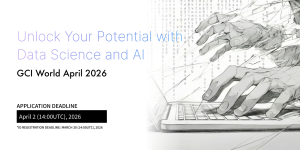
The GCI World program from the University of Tokyo

Hello everyone 👋

Here’s an interesting opportunity for those interested in Data Science & AI.

The GCI World (April 2026) program from the University of Tokyo (in collaboration with the Matsuo–Iwasawa Lab) is now open and available to students worldwide 🌏

✨ Highlights:

  • 💻 Online (conducted in English)
  • 💰 FREE for the basic course
  • 🎓 Open to active university students

📅 Application deadline: April 2, 2026 (14:00 UTC)
📚 Classes begin: April 8, 2026

This program is shared by JICA Indonesia

🔗 More information & registration:
https://weblab.t.u-tokyo.ac.jp/en/lecture/gci/

If you’re interested in AI/Data Science, this is a great opportunity 🙌

Read More »
AI Joint Center UGM-IOH-NVIDIA
muhalfs

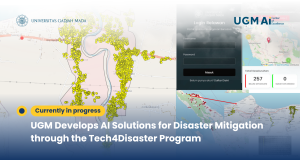
UGM Develops AI Solutions for Disaster Mitigation through the Tech4Disaster Program

YogyakartaUniversitas Gadjah Mada (UGM), through its Faculty of Geography team, has introduced an artificial intelligence (AI)-based innovation under the AI for Climate program through the Tech4Disaster use case—an integrated solution for disaster and landslide mitigation.

This program is driven by Indonesia’s high vulnerability to various natural disasters, which necessitates a transformation from reactive disaster response approaches to more proactive, integrated, and data-driven systems.

Technology-Based Disaster Management Transformation

Through the Integrated Smart Disaster Management approach, the Tech4Disaster solution integrates several advanced technologies, including:

  • Geospatial Technology (GIS)
  • Internet of Things (IoT)
  • Big Data
  • Artificial Intelligence (AI)

This integration enables environmental signals to be processed into real-time spatial information that supports fast and accurate decision-making.

The Tech4Disaster solution is built on a system architecture consisting of four main components:

  1. Sense (IoT)
    Real-time data collection through field sensors, drones, and community reports.
  2. Store (GeoBigData)
    Centralized storage for large-scale spatial, historical, and demographic data.
  3. Think (GeoAI)
    Utilization of machine learning for:
    • Disaster risk prediction
    • Automated damage classification
  4. Act (Geospatial/GIS)
    Visualization through dynamic maps, decision-making dashboards, and evacuation route optimization.

This approach enables faster response times while supporting long-term, data-driven planning.

Participatory Mapping and Rapid Response

One of the key innovations in this program is participatory mapping (needs mapping), which allows communities to directly report field conditions through digital platforms.

Additionally, the system supports:

  • Rapid mapping based on satellite imagery
  • Mapping of flood- and landslide-affected areas
  • Real-time monitoring dashboards

As a result, aid distribution and evacuation processes can be carried out more accurately and effectively.

Advanced Analytics with AI

In terms of analytics, Tech4Disaster leverages deep learning models such as Prithvi-EO-2.0, which is based on the Vision Transformer architecture, to detect potential landslides from satellite imagery.

This model is trained using thousands of polygon datasets derived from manual interpretation, enabling it to:

  • Identify landslide-prone areas
  • Detect environmental changes
  • Support post-disaster analysis

Case Study and Implementation

The implementation of this solution has been carried out in several regions across Indonesia, including Aceh (Bener Meriah Regency) as a case study area.

Through the use of satellite data and AI, the team successfully:

  • Mapped affected areas
  • Identified building damage
  • Compared pre- and post-disaster conditions

Towards Climate-Resilient Communities

The Tech4Disaster program aims to:

  • Reduce disaster risks and casualties
  • Accelerate rehabilitation processes
  • Support sustainable spatial planning
  • Build climate-resilient communities

This initiative also aligns with the achievement of the Sustainable Development Goals (SDGs), particularly in disaster resilience and sustainable development.

By integrating AI, geospatial technologies, and community participation, UGM—through Tech4Disaster—demonstrates that technology can be a key enabler in addressing the challenges of climate change and future disasters.

Read More »
AITF KOMDIGI dan UGM
muhalfs

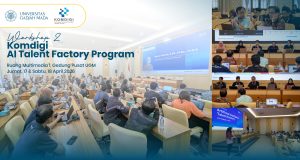
The AI Talent Factory Program Workshop 1 KOMDIGI for strengthening national digital talent

Universitas Gadjah Mada (UGM) conducted Workshop 1 of the AI Talent Factory (AITF) Program organized by the Kementerian Komunikasi dan Digital Republik Indonesia through its Human Resources Development Agency for Communication and Digital. The event took place on March 11–13, 2026, at UGM, Yogyakarta. The AI Talent Factory program is a strategic government initiative aimed at strengthening the national digital talent ecosystem, particularly in the field of Artificial Intelligence (AI). It is designed as a platform for learning and collaboration to encourage participants to develop innovative AI solutions that are relevant to industry and public sector needs.

This first workshop focused on strengthening participants’ foundational understanding of AI concepts, introducing use cases from the Directorate General of Public Communication and Media, and formulating project development plans. One of the main focuses was the development of solutions for public issue monitoring, producing outputs such as public narratives and briefing notes. The activity involved various stakeholders, including representatives from ministries, UGM academics, industry mentors, and AITF participants. Several key figures were also present, including the Head of the Human Resources Development Agency for Communication and Digital, UGM leadership, as well as experts and practitioners from both domestic and international backgrounds.

The workshop series included an online opening session, expert lectures, in-depth discussions on use cases, and presentations of AI solution development by participants. On the second and third days, activities were held onsite at UGM, focusing on intensive collaboration among participants, mentors, and technical tutors. Through this program, it is expected that outstanding digital talents will emerge, capable of developing AI-based solutions to support public communication needs and digital transformation in Indonesia. Furthermore, collaboration between government, academia, and industry is expected to grow stronger in driving future technological innovation

Read More »
AI Joint Center UGM-IOH-NVIDIA
muhalfs

Public Lecture by NVIDIA and Indosat Ooredoo Hutchison at Universitas Gadjah Mada: Driving AI Transformation from Campus to Industry

Public Lecture by NVIDIA and Indosat Ooredoo Hutchison at Universitas Gadjah Mada: Driving AI Transformation from Campus to Industry

Yogyakarta, February 11, 2026 – As part of the Technical Meeting & Tech Sharing Session between Universitas Gadjah Mada, Indosat Ooredoo Hutchison, and NVIDIA, a public lecture was held featuring global AI industry experts.

This lecture served as a platform to share strategic insights on developing the national AI ecosystem, leveraging GPU computing infrastructure, and fostering Academic-to-Industry (A2I) collaboration models to accelerate the downstreaming of university research into real-world industrial applications.

In its presentation, NVIDIA highlighted the importance of integrating the AI stack—from edge computing (Jetson), GPU-based model training, optimization using TensorRT, to deployment orchestration through Metropolis—as the foundation for building scalable and production-ready AI solutions.

Meanwhile, Indosat Ooredoo Hutchison emphasized the role of 4G/5G connectivity and sovereign cloud infrastructure in enabling AI implementation across various sectors, including precision agriculture, AI-driven healthcare, and disaster mitigation.

The event was attended by lecturers, researchers, students, and industry partners, and continued with interactive discussion sessions as well as laboratory visits to showcase AI research implementations within Universitas Gadjah Mada.

Through this public lecture, Universitas Gadjah Mada reaffirmed its commitment as an AI Center of Excellence in developing top-tier talent, strengthening research aligned with national needs, and accelerating the adoption of sovereign and impactful AI technologies for society.

Read More »
AI Joint Center UGM-IOH-NVIDIA
muhalfs

Universitas Gadjah Mada, Indosat Ooredoo Hutchison, and NVIDIA Strengthen AI Collaboration through Technical Meeting

Universitas Gadjah Mada, Indosat Ooredoo Hutchison, and NVIDIA Strengthen AI Collaboration through Technical Meeting

Yogyakarta, February 10, 2026 – Universitas Gadjah Mada (UGM), in collaboration with Indosat Ooredoo Hutchison (IOH) and NVIDIA, held a Technical Meeting & Tech Sharing Session on February 9–10, 2026, as a follow-up to the initiative of establishing an AI Center (Joint Center) in Indonesia. This meeting marked a strategic step in strengthening research–industry collaboration to build an integrated, scalable, and impactful national artificial intelligence (AI) ecosystem. The discussions focused on the progress of the UGM AI Center and the deep dive into three priority use cases: SmartAgri (Precision Agriculture), eNose-TB (Healthcare AI), and Tech4Disaster (AI for Resilience).

SmartAgri: Multimodal AI for Precision Agriculture

UGM presented the development of SmartAgri as a solution to challenges such as climate variability, limited data integration, and low agricultural efficiency. The technologies include Machine Learning for yield prediction and irrigation needs, Computer Vision (YOLO) for crop monitoring, multispectral UAVs, and decision support systems for precision fertilization.

Implementation through the SIPASI (Irrigation Modernization) program has demonstrated around a 25% increase in water efficiency and an improvement in the cropping index from 132% to 188%, indicating readiness for national-scale deployment.

Collaboration with NVIDIA and Indosat Ooredoo Hutchison focuses on developing multimodal AI using Jetson for edge inference, model training with NVIDIA TAO, orchestration via Metropolis, and 5G connectivity support for remote farm deployment.

eNose-TB: Fast and Non-Invasive TB Screening

In response to the high burden of Tuberculosis in Indonesia (approximately 1,060,000 cases annually), UGM introduced eNose-TB, a screening system based on Volatile Organic Compounds (VOC) using a Hybrid Edge–Cloud AI approach.

The system utilizes NVIDIA Jetson for real-time edge inference and IOH Sovereign Cloud with NVIDIA T4 GPUs for deep learning training and continuous learning. Internal models have shown approximately 86% sensitivity, with further improvements targeted through dataset harmonization and full migration to deep learning.

Tech4Disaster: AI for Disaster Resilience

In disaster mitigation, Tech4Disaster has deployed 37 sensor nodes and developed AI analytics for detection systems. Connectivity challenges are being addressed through optimization of IOH’s 5G network and integration of edge AI into autonomous drone systems.

Academic-to-Industry (A2I) Strategy

NVIDIA outlined the A2I roadmap as a platform to transition academic research into industrial adoption, including the finalization of the Joint Center, formal launch, and subsequent scaling and expansion phases. The meeting concluded with the establishment of technical action items for each project as concrete steps toward joint implementation.

This collaboration is expected to serve as a strategic model of academic–industry partnership in accelerating AI-driven digital transformation in Indonesia.

Read More »
Berita terbaru
muhalfs

Collaboration between Universitas Gadjah Mada and Microsoft Organizes AI Training and Certification Program

A total of 663 participants took the exam between May and September, with a steadily increasing pass rate across different regions in Indonesia.

The evaluation of learning outcomes conducted from May to September showed a significant increase in both the number of participants and the pass rate. Based on the data, a total of 663 participants took part, with 279 successfully passing the exam.

According to the recap data, the number of participants who passed increased each month. In May, only 23 participants passed, rising to 47 in June, 50 in August, and surging to 159 in September. The average scores of those who passed remained consistently high, with the highest recorded in May (831.04), despite the smaller number of participants at that time.

A coordinator of the examination stated that this increase reflects the effectiveness of the learning strategies implemented. “We have observed a steady improvement in both learning motivation and understanding of the material from month to month,” they explained.

The average time taken by participants also demonstrated efficiency, ranging from 2,045 to 2,187 seconds. This indicates that participants were not only able to complete the exam successfully but also managed their time effectively.

With this positive trend, the organizers আশা that the quality of learning will continue to improve and that the number of successful participants will increase in the coming months. Regular evaluations will continue to ensure sustainable and optimal outcomes.

Read More »